

Life after SAP BPC: your most common questions answered
As SAP Business Planning and Consolidation (BPC) approaches the end of its mainstream support, many organisations are considering their next steps. For finance and IT leaders, this is more than just a software change – it is an opportunity to re-evaluate enterprise performance management processes, modernise technology, and future-proof planning, budgeting, and reporting capabilities.
In this article, we address some of the most common questions we get from customers about SAP BPC end-of-maintenance, the implications for your business, and the migration options available, helping you make an informed, strategic decision.
Frequently asked questions on SAP BPC end-of-maintenance
What is the current status of SAP BPC and its long-term roadmap?
SAP BPC remains a supported product, but its development focus has shifted towards SAP Group Reporting and SAP Analytics Cloud (SAC). Customers should view BPC as a mature solution with no future innovation. This reflects the history of the past 15 years where all enhancements have been delivered through connectivity through to other products in the SAP portfolio, notably, SAC.
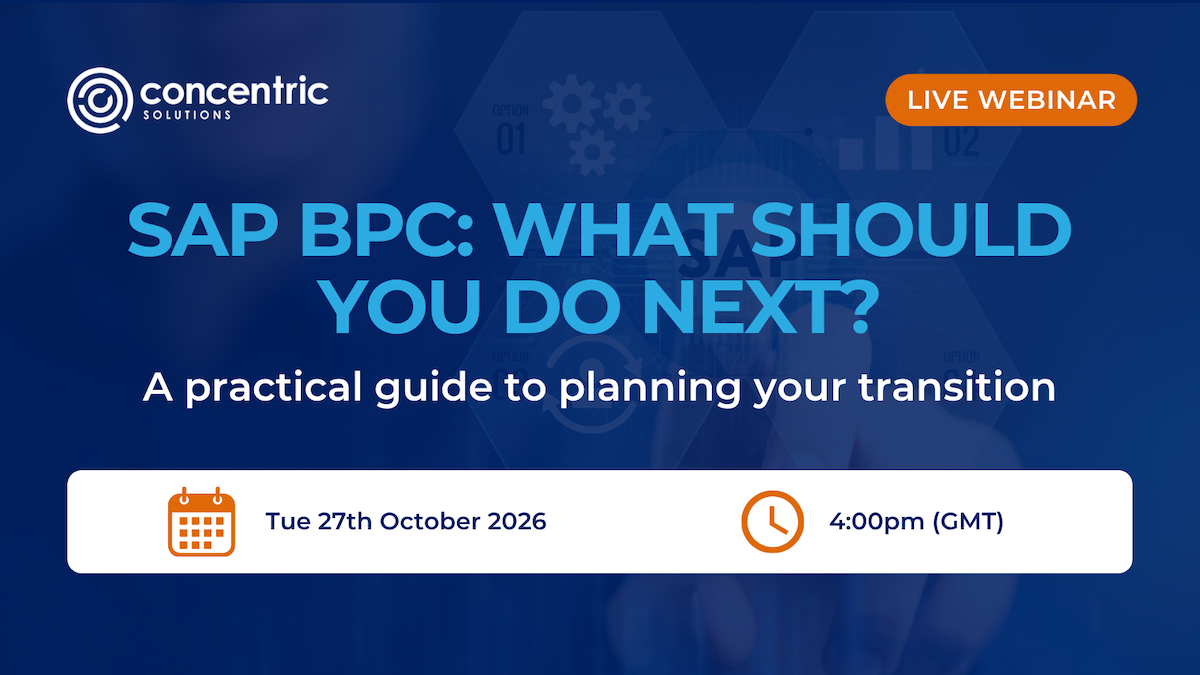
Register for our which explores the 2026 BPC Roadmap in depth: https://www.linkedin.com/events/7404109436191154176
Will SAP continue to support BPC, and for how long?
SAP has committed to mainstream maintenance, but the support timeline varies by version and platform. For example, BPC for Microsoft v10.1 reaches EOM on 30 June 2026, whereas BPC for NetWeaver v10.1 is supported until 31 December 2027.
Even the version for BW/4 that SAP confirmed as the go forward maintained product no longer has commitment on maintenance. SAP had previously implied was to 2040 alongside other SAP HANA supported solutions, but withdrew this in a little noted comment in SAP Note 3362512 (Released On: 24.02.2025):
“SAP BW/4HANA product line will be aligned with the SAP S/4HANA maintenance extension and will be maintained until at least 2040.”
But in relation to BPC, goes on to say:
“…however, this is not decided yet by the higher management of SAP. You will get an announcement from SAP if there is an extension for the current release or new release.”
In relation to the SAP BPC versions for BW/4HANA, many users could already be operating out of maintenance. SAP BPC 2023 is the final supported version of SAP BPC and this has a current end of maintenance date of 31 December 2030, a full 10 years short of the 2040 commitment previously implied.
While SAP have talked in the past of BPC 2025, this release is no longer certain (we will update this blog should BPC 2025 be confirmed).
To avoid falling foul of the end of maintenance, we would recommend all customers review their current version and start evaluating options to avoid unsupported scenarios, particularly for versions reaching end-of-maintenance soon.
For a full overview of up-to-date end of maintenance timelines for each version, read our blog: https://concentricsolutions.com/blog-article/summary-end-of-maintenance-dates-for-sap-bpc
Why is SAP ending support for BPC?
SAP has shifted investment away from BPC to focus on its new generation of cloud-native solutions: SAC for planning and analytics, and Group Reporting for consolidation. BPC represents a smaller part of SAP’s business and no longer aligns with their long-term, cloud-focused roadmap.
BPC’s end-of-support follows a long-term strategy which has seen it starved of development and innovation and left it trailing competitor solutions while SAP has focussed on SAC and Group Reporting. This is more than just a signal from SAP that it has no interest or focus on BPC, but it is a clear indication from them that users should be planning their migration actively. This should not be treated just as a technical deadline, but should be considered the final nail in the coffin from SAP and action should be taken early to avoid rushed transitions in the future.
What are the key differences between SAP BPC, SAP Group Reporting and SAC Planning?
BPC delivers strong consolidation and planning capabilities and was an early leader as a unified platform for EPM designed to be managed by business users. The latest generation of SAP solutions diverge from this by reverting to a point solution focus and relying much more heavily on technical resources for deployment and management.
Group Reporting delivers Consolidation capabilities, however, is a component of S/4HANA and is therefore tied to the SAP ledger and a single instance of S/4 resulting in integration challenges for businesses with multi-tier or heterogeneous ERP landscapes. SAC as a planning point solution introduces advanced cloud-based modelling, collaboration and analytics although this now is restricted to users who invest significantly in the SAP BDC (Business Data Cloud), potentially forcing users to purchase solution components which are not necessary for their planning processes.
Is SAP still upgrading the EPM add-in used with BPC, or is it just being maintained?
SAP has not invested in any development or enhancements for the EPM add-in for many years and has no roadmap for any future enhancements.
Along with BPC, it remains in maintenance mode only and will be retired alongside SAP BPC. While the EPM add-in has been a popular and powerful Excel interface to BPC for many users, it is firmly tied to the BPC product line and is not part of SAP’s roadmap for other planning or reporting solutions.
Is BPC at risk from cyber-attacks?
BPC faces similar cybersecurity risks to any other on-premise application. If you are running BPC 10.1 on Microsoft, the risks are already elevated, as many supporting Windows Server versions have reached end-of-support, meaning no further security patches from Microsoft. In contrast, BPC for NetWeaver remains on a supported platform, so SAP is still actively addressing vulnerabilities.
However, beyond 2030, all BPC versions will be fully out of support – putting customers in a high-risk position with no official security patches and increased exposure to threats, such as ransomware.
Should organisations still invest in SAP BPC, or start planning a migration?
For some, maintaining BPC short-term remains viable. However, forward-looking organisations should begin assessing modern, cloud-based EPM platforms that align with longer-term digital finance strategies.
What migration options are available for existing BPC users?
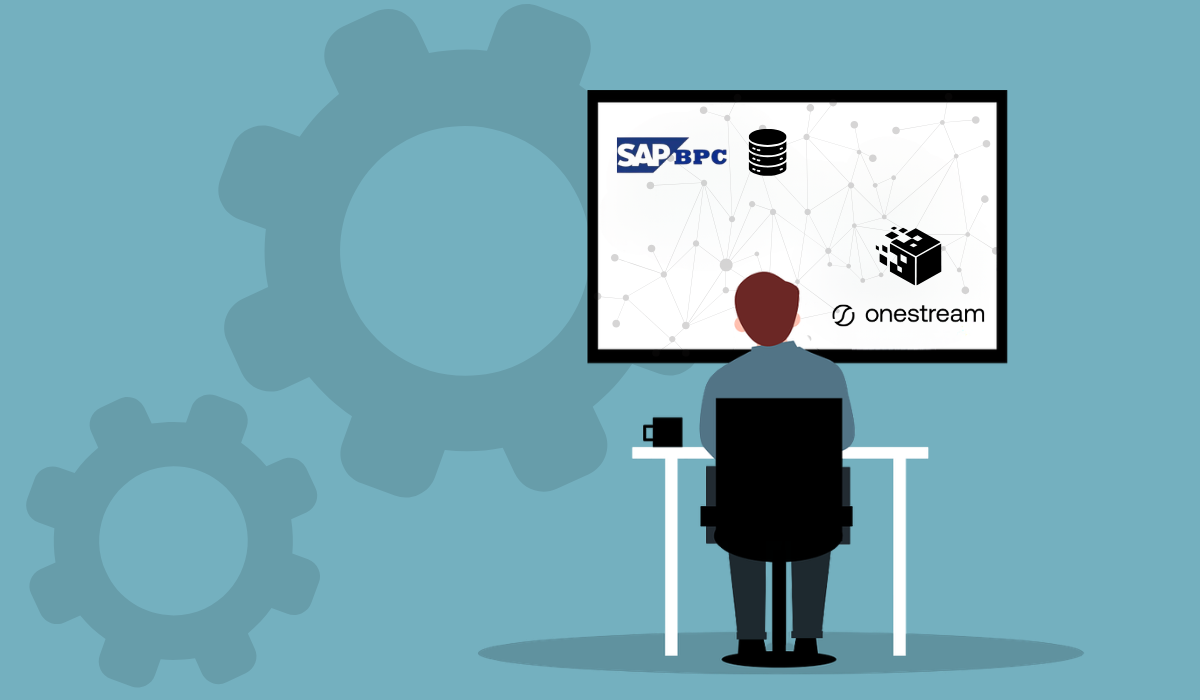
Organisations heavily invested in SAP typically choose SAP replacements such as moving to SAP Group Reporting for consolidation, or adopting SAC for planning & analytics. Those with lighter SAP footprints more often adopt non-SAP solutions, evaluating cloud-based platforms such as OneStream, Oracle EPM Cloud, Anaplan or Lucanet — depending on functional needs and IT strategy.
Read our blog to learn about alternatives to BPC: https://concentricsolutions.com/blog-article/sap-bpc-navigating-the-end-of-maintenance-and-exploring-alternative-solutions
How do cloud-based EPM solutions compare with SAP’s on-premise tools?
Cloud platforms offer greater agility, scalability and integration with emerging technologies such as AI, machine learning and ESG reporting – all critical to the modern finance function.
What is the best non-SAP solution to replace BPC?
There is no single “best” alternative – the right choice depends entirely on your organisation’s circumstances, priorities, and existing technology landscape.
- Unified platform approach – If your goal is to bring planning, consolidation, and reporting into a single integrated solution, OneStream is a strong contender.
- Modular approach – If you prefer flexibility and the ability to deploy capabilities incrementally, Anaplan offers a planning-first platform, and with its recent acquisition of consolidation capabilities (Fluence), it can now address both planning and financial close requirements.
- ERP alignment – If your organisation runs primarily on Oracle ERP, Oracle EPM Cloud may be the most logical choice, mirroring the same integration advantages that SAP users gain with SAP-native tools.
- Mid-market focus – For organisations seeking a streamlined, finance-friendly solution, Lucanet offers solid consolidation and reporting features with a lower total cost of ownership.
Beyond the technology itself, it’s important to step back and assess your business processes. If the move away from BPC is purely driven by end-of-support timelines, you risk simply replacing one system with another without gaining real process improvements. A migration is an opportunity to modernise, simplify, and deliver a better user experience – not just to replicate what you already have on a supported platform.
What challenges should organisations expect during migration?
Common hurdles include data migration, process redesign, change management and user retraining:
- Data migration: Ensuring accuracy, completeness, and consistency when moving historical and transactional data as well as making best decisions on archiving.
- Process redesign: Aligning workflows with best practices for efficiency and effective reporting supported by optimised application design and latest generation capabilities from new solutions.
- Change management: Managing stakeholder expectations and securing buy-in across finance and IT teams.
- User retraining: Upskilling users on new systems, interfaces, and reporting capabilities.
- Integration: Connecting the new EPM platform with ERP, BI, and other systems including taking advantage of more sophisticated automation and data quality support.
- Timeline and resource constraints: Coordinating IT, finance, and consulting resources to meet deadlines.
With careful planning and expert guidance, these can be mitigated effectively.
How can finance teams evaluate whether BPC is still the right strategy?
Assess the cost of ownership, support longevity, integration requirements and the organisation’s broader digital-finance vision. A structured roadmap exercise is often the best starting point.
Download our framework for assessing whether BPC can still be the right strategy.
What drives the decision to migrate – technology or business strategy?
It’s a balance of both. Technology enables the transformation, but business strategy defines its direction. Finance leaders should ensure any technology change supports measurable business outcomes.
While BPC still functions in the short term, finance leaders should assess migration not just as a technical upgrade, but as a strategic move to support future-ready finance operations.
How does Concentric support clients through this transition?
We help organisations ask the right questions from the start and advise on process change. Our advisory framework enables you to evaluate your current landscape, define a realistic future-state architecture and implement technologies to align technology, people and process. Our solutions portfolio spans 20+ years of transforming planning, budgeting, financial consolidation and operational reporting.
Can organisations take a phased approach to modernising their EPM environment?
Absolutely. A phased approach is often the most practical way to modernise, especially for organisations transitioning from SAP BPC to modern, cloud-based platforms. Many clients begin with targeted use cases such as consolidation or planning, then expand gradually as confidence and capability grow.
Read success stories from customers who have modernised their EPM landscape through a multi-phased approach: https://concentricsolutions.com/our-company/success-stories
How long does it typically take to migrate to a new EPM platform?
Timelines vary by scope and complexity, but most programmes run from as little as three months for point solutions using templated accelerators to eighteen months for complex solutions. The key variables are based on the breadth of scope and the degree of process redesign required.
In summary - a critical juncture
The end of SAP BPC support is a critical juncture, but it needn’t be a disruptive one. With the right strategy, it can become the spark for innovation, enabling you to start the journey towards a more intelligent, cloud solution that enhances collaboration, streamlines finance processes, and delivers deeper business insights. By understanding your options now, you can plan a smooth transition that safeguards business continuity and positions your organisation to capitalise on the next generation of performance management technology.
Ready to explore your migration path?
Our consultants have helped finance teams across multiple industries navigate the transition from SAP BPC to modern, future-ready performance management solutions. Whether you are looking for a like-for-like replacement, a move to SAP Group Reporting, or a broader transformation of your finance systems, we can guide you through the options and help you build a roadmap that fits your business goals.
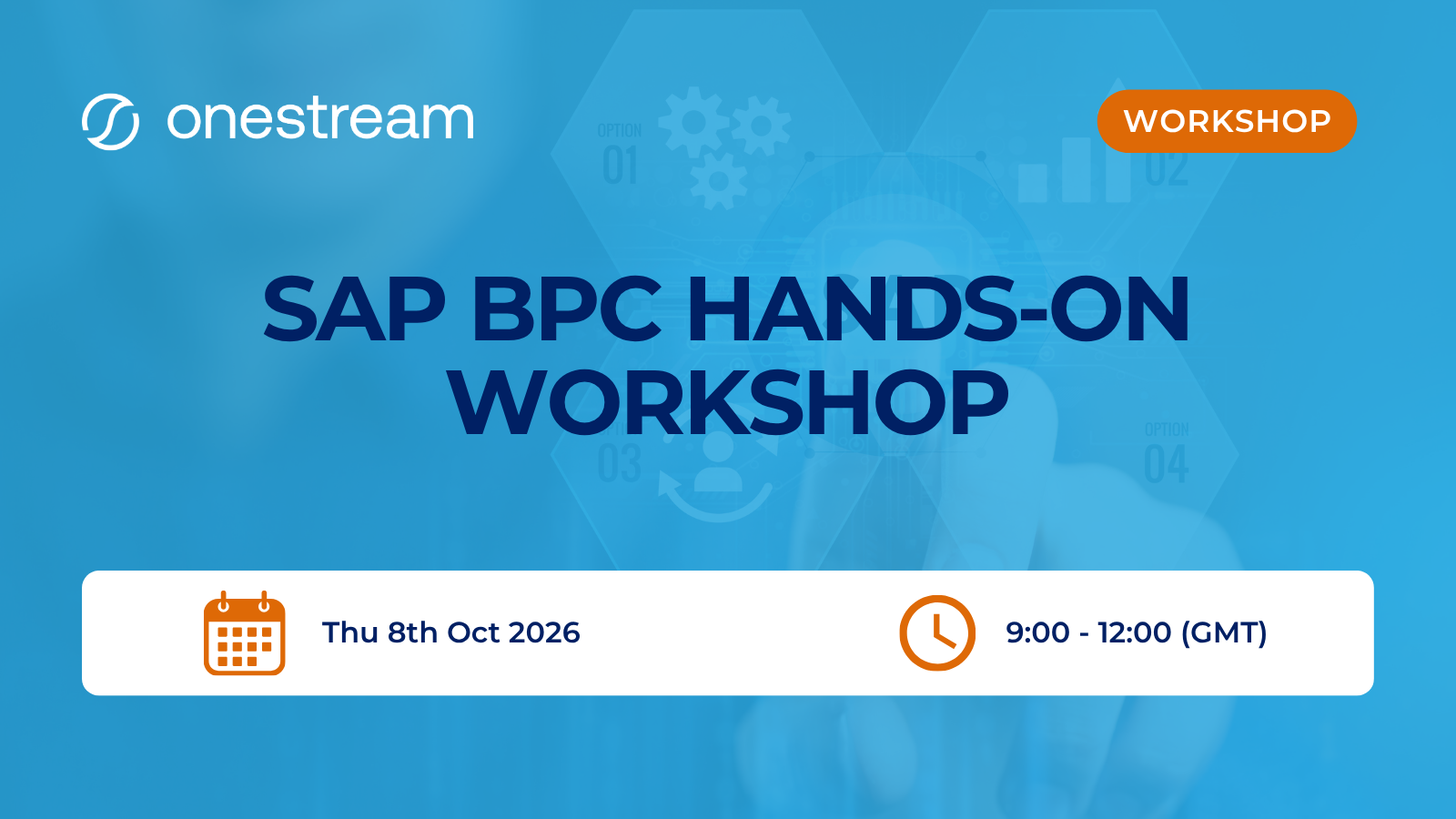
Join our next BPC Hands-On Workshop on Thursday 8th October 2026 to look at the similarities and differences between the two tools from a business user's perspective and share real life stories of customers moving from SAP BPC to OneStream.
Get in touch with our team today to arrange a confidential discussion and start planning your smooth, low-risk migration: https://concentricsolutions.com/contact
Solutions
Services
Company
Contact Us
Innovation Centre 7
Keele Science Park,
Keele, Staffordshire ST5 5NL
+44 (0)203 411 0140
info@concentricsolutions.com